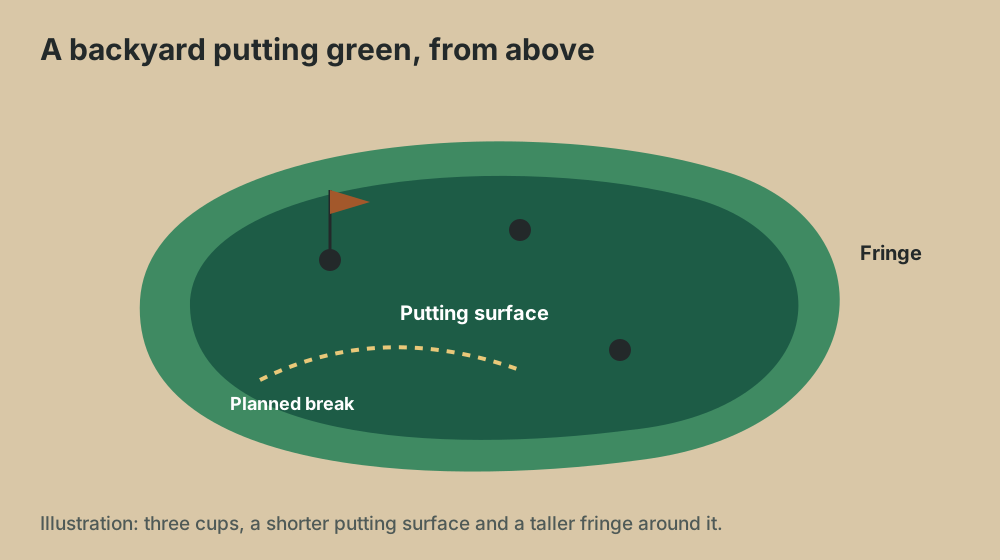
A backyard putting green is built differently from a turf lawn. It uses short, dense turf on a firmer, smoother base, with cups and contours planned before the turf goes down. The best greens are sized and shaped around the putts you actually want to practice.
Size it to how you'll use it
Think about the putt lengths you practice, how many cups you want, and whether anyone will chip onto it. A small green with a few well-placed cups often gets more use than a big one squeezed against a wall. Leave room to walk around it.
The base and contours
Putting surfaces need a smoother, firmer base than a lawn, compacted and shaped so the ball rolls true. Gentle breaks are shaped into the base before the turf goes down. Ask the installer how they'll shape and check the contours.
Turf and fringe
Greens use short-pile turf made for ball roll. A taller fringe around the edge frames the green and gives you somewhere to chip from. The pile height guide explains the difference.
Heat and placement
Most people practice early or late in Peoria summers. If the green can sit where it gets afternoon shade, it'll be usable more of the year. Turf on a green heats up like any other turf in direct sun.
Cost
We haven't found a published price source for Arizona putting greens that we trust, so we don't quote a range. Size, contours, cups and fringe all add work. A written quote after someone measures is the reliable number, and you can ask us to set up an estimate for one. If you live near a course, like the homes around Blackstone, compare the green's color with the course grass before you choose.